University Portfolio
Fusion-designed ski concept focused on balance, control, and play.
A product design project exploring lightweight geometry, progressive flex, and a distinctive top sheet language inspired by alpine contours.
3D Ski Model
Interactive preview of the Fusion 360 design.
3D model loading. Replace assets/ski.glb with the exported file.
Featured Project
Fusion-designed ski for responsive carving
My ideal ski feels stable at speed while remaining playful on mixed terrain. I designed the ski, construction layers, and aesthetic system in Fusion 360. For my portfolio I wanted to design a ski. The idea behind it being a ski design that has never been seen before but still functional and able to be pushed hard through tough terrain. I wanted my design to be an all mountain ski that can still handle those deep snow days. I started out by sketching my design very simply to get the rough idea of what I wanted them to look like and how I wanted the composite of the core of the ski to be structured. This will dictate what material the ski is created from.
Design Goals
- Produce a mixed terrain ski.
- Provide a progressive flex profile for smoother landings.
- Create an original identity.
Key Specs
- Length: 176 cm
- Width: 14 cm
- Materials: Poplar core center with hardwood maple or ash sandwich core
Process
From research to refinement
Research & Inspiration
Having skied different types and brands of skis over many years has helped me to evaluate the ski's performance in different snow conditions.
Early Stage Sketches
Ski geometry with rocker.
Cardboard Prototype
Built physical mock-ups to validate proportions and fin placement.
Fusion Design
Created the CAD model and refined geometry for performance goals.
Refinement
Refined details and presentation assets based on feedback and test insights.
Benchmarking
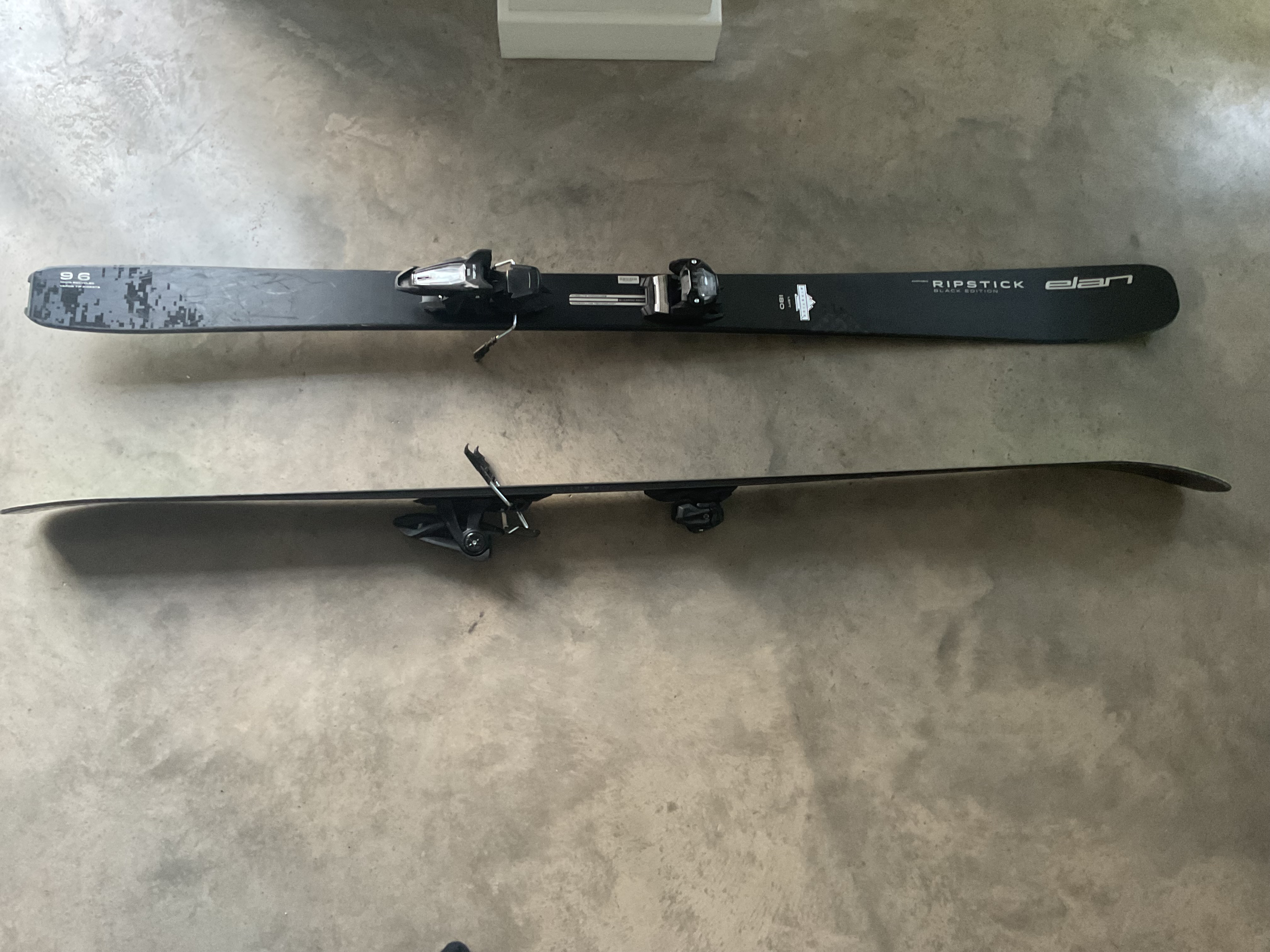
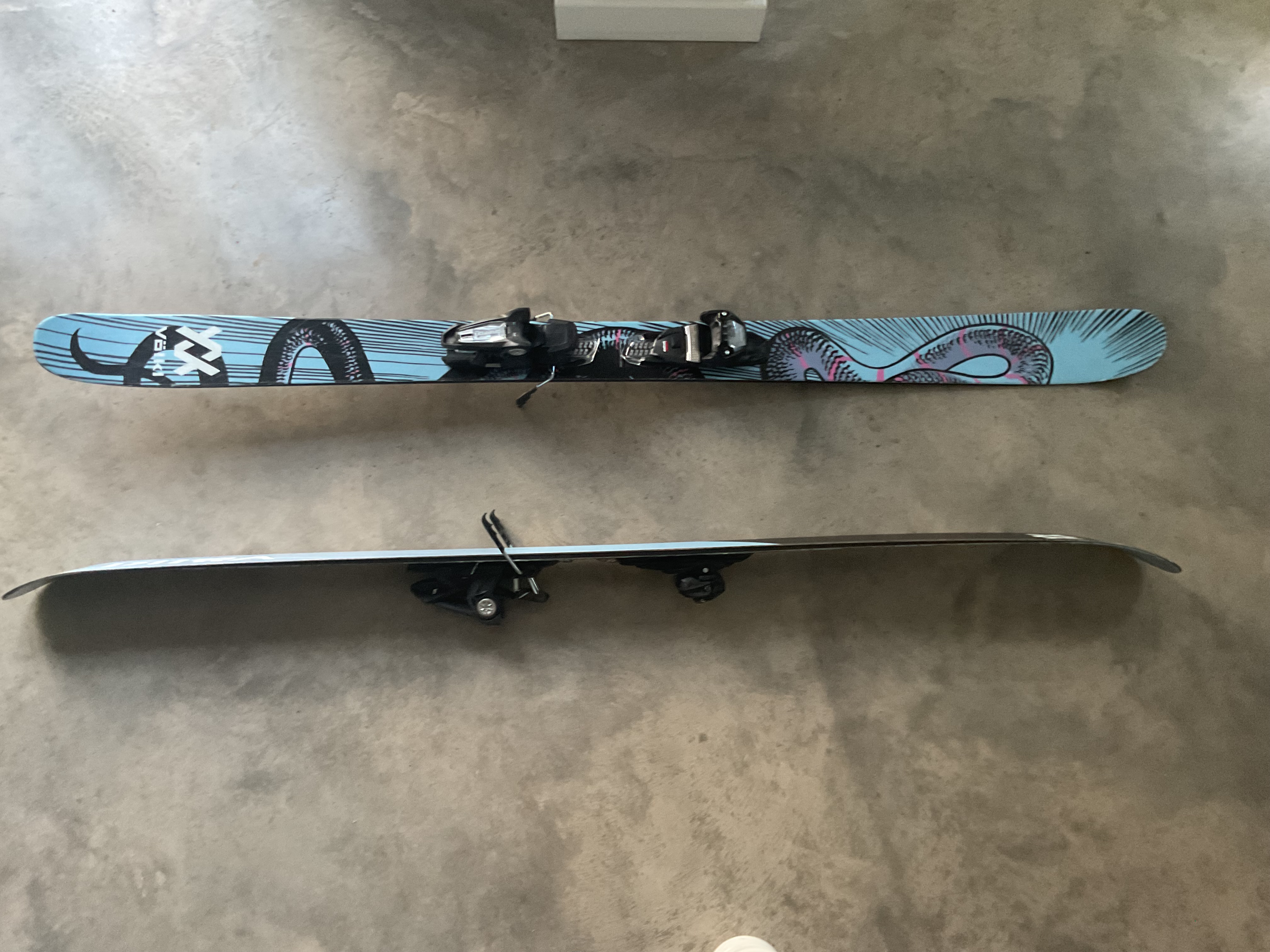
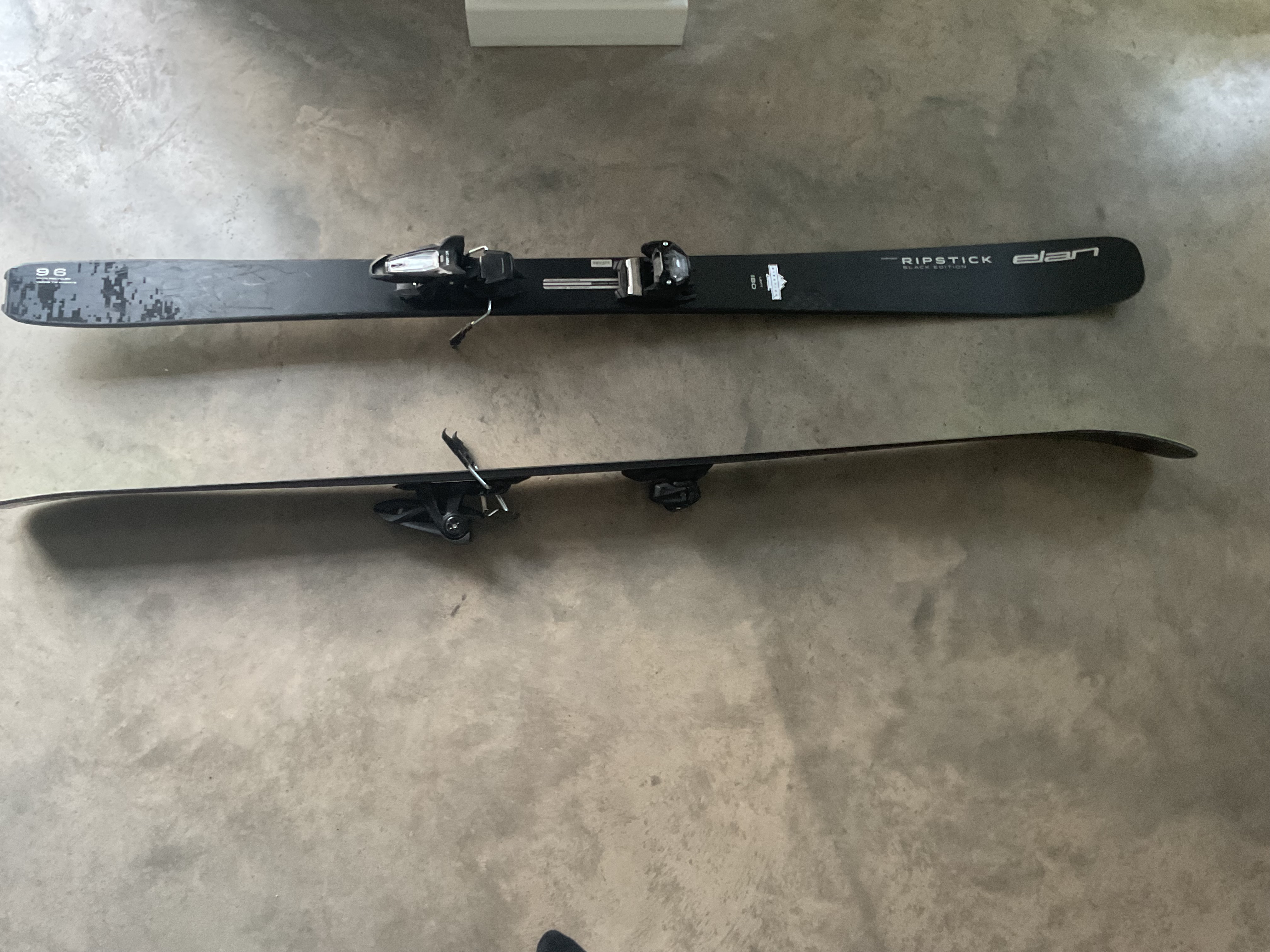
Comparing profiles and proportions
Three reference skis were photographed to compare sidecut, taper, and rocker profiles before finalizing the Fusion model.
Ski design and composition
Ski design and composition
Identifying existing problems.
Market context
From a performance perspective, there are many different brands, shapes and specifications available on the market and this is continuingly evolving.
I wanted to create a unique ski design that was still functional, yet aesthetically pleasing and fun to ski.
Composition of a ski
Skis are usually a composition of layers of different materials depending on the level of ski and the function of the ski. This can consist of wood, composite, fibreglass, carbon fibre and metal sheets.
Core material wood provides natural flex, damping, and a lively feel to the ski. Foam/composite is much lighter and is found in some beginner or specialized skis, however it is a lot less durable than wood. Reinforcement layers are normally made out of fiberglass, which adds torsional rigidity and strength to the ski, carbon fiber that offers lightweight stiffness, which is very popular for touring skis, titanal (aluminum alloy) that provides dampness and power for high performance skis.
Key components and materials
Core — Wood: most common core material used. Wood provides rebound, vibration damping and durability. Aspen and poplar are light woods. Maple and ash are heavier woods and are used for stiffness and durability. Foam: often used for beginners because it’s cheaper, lightweight and durable.
Reinforcements or stiffness — Fiberglass adds strength and torsional rigidity. Carbon fiber is lightweight, stiff and responsive. Metal (titanal/aluminium alloy) is common in high performance skis and adds damping, stability and edge grip.
Base — The snow interface, usually polyethylene. It creates speed and absorbs wax, which increases speed.
Edges — Used for control, usually steel, which helps with grip, durability and sharpness.
These elements are layered together with strong epoxy around the wooden core creating a sandwich.
Early stage sketches
Early stage sketches
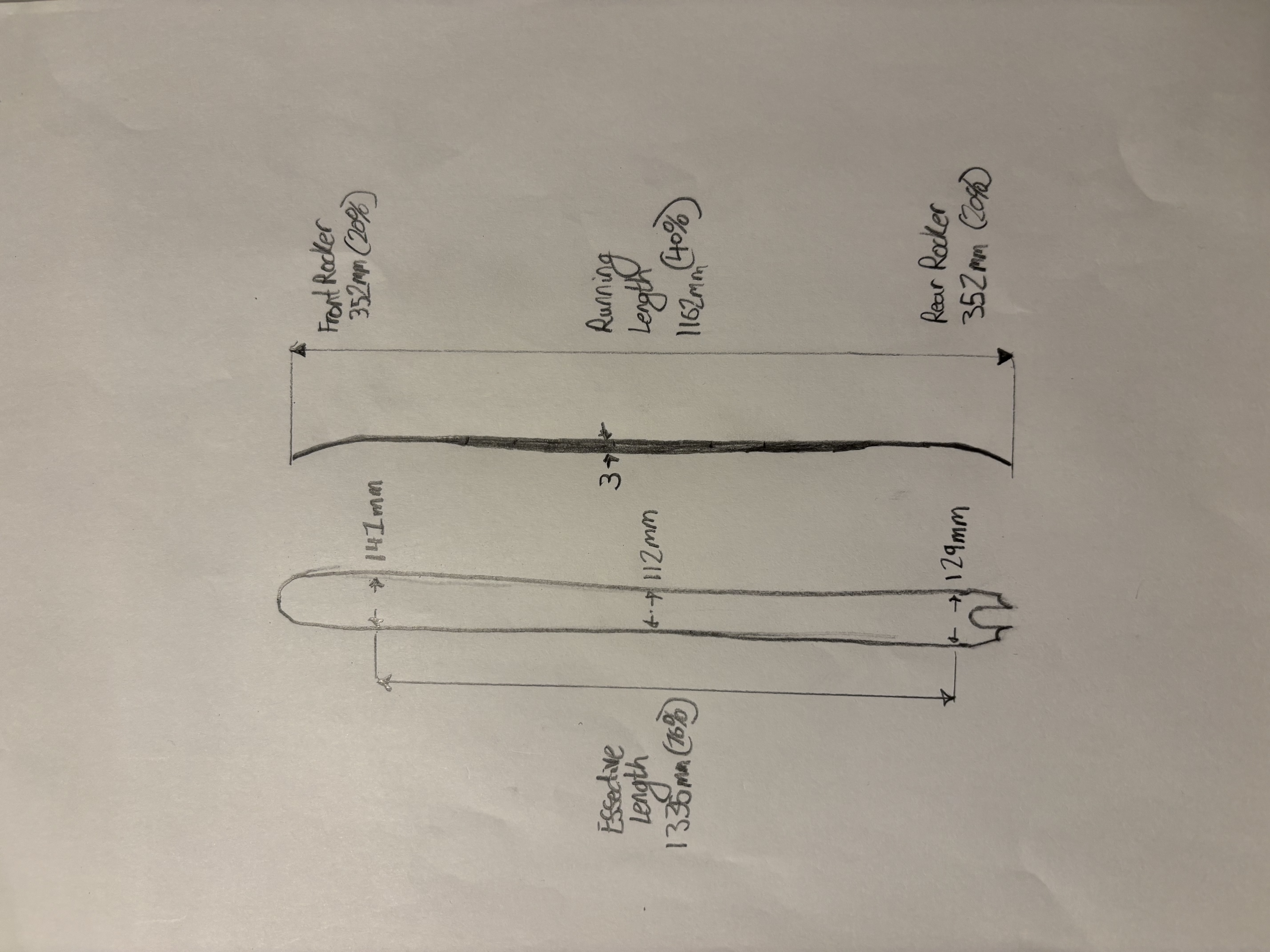
Initial silhouette study combining side profile and top sheet layout.
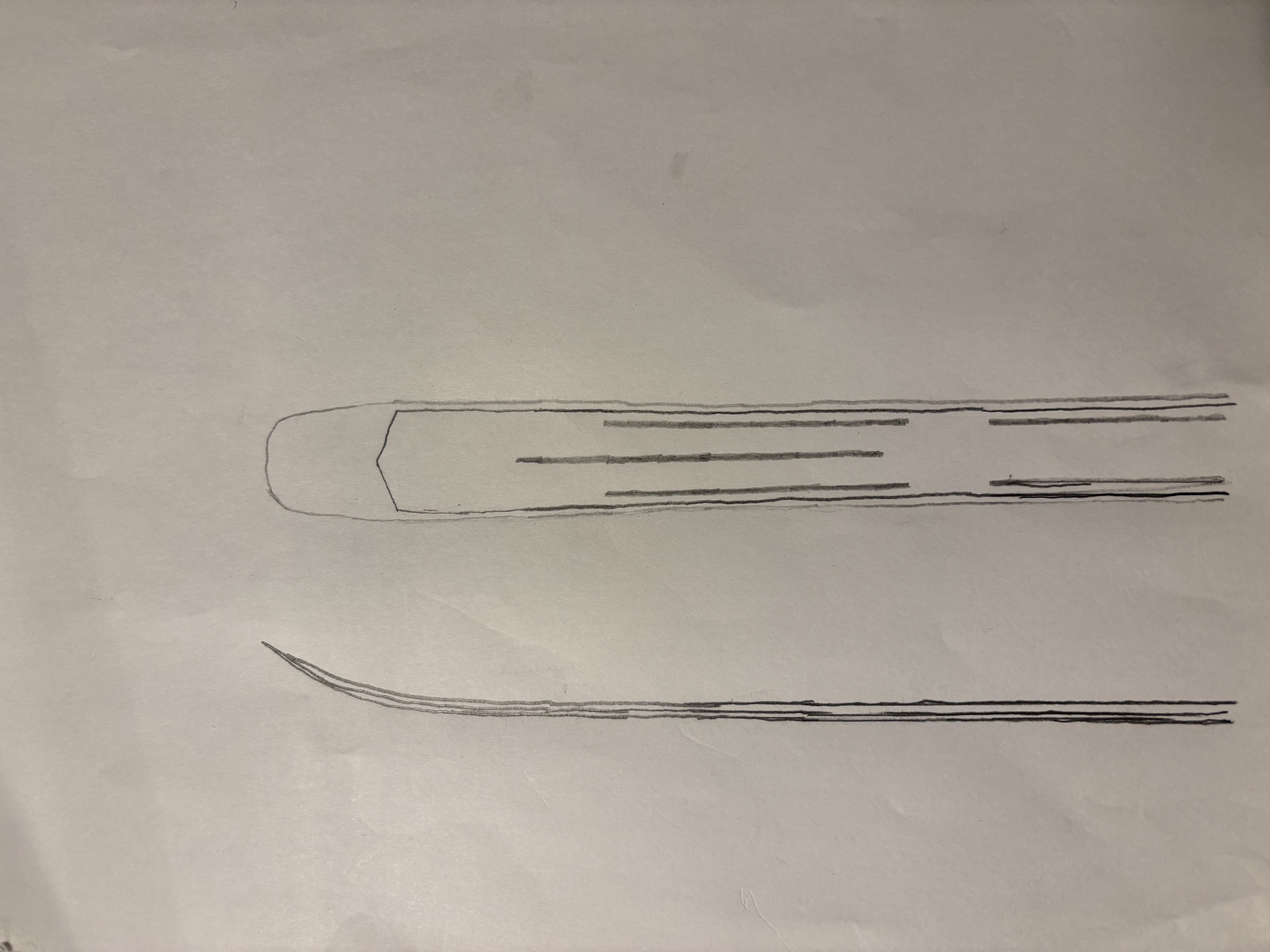
Ski geometry with rocker and tip design.
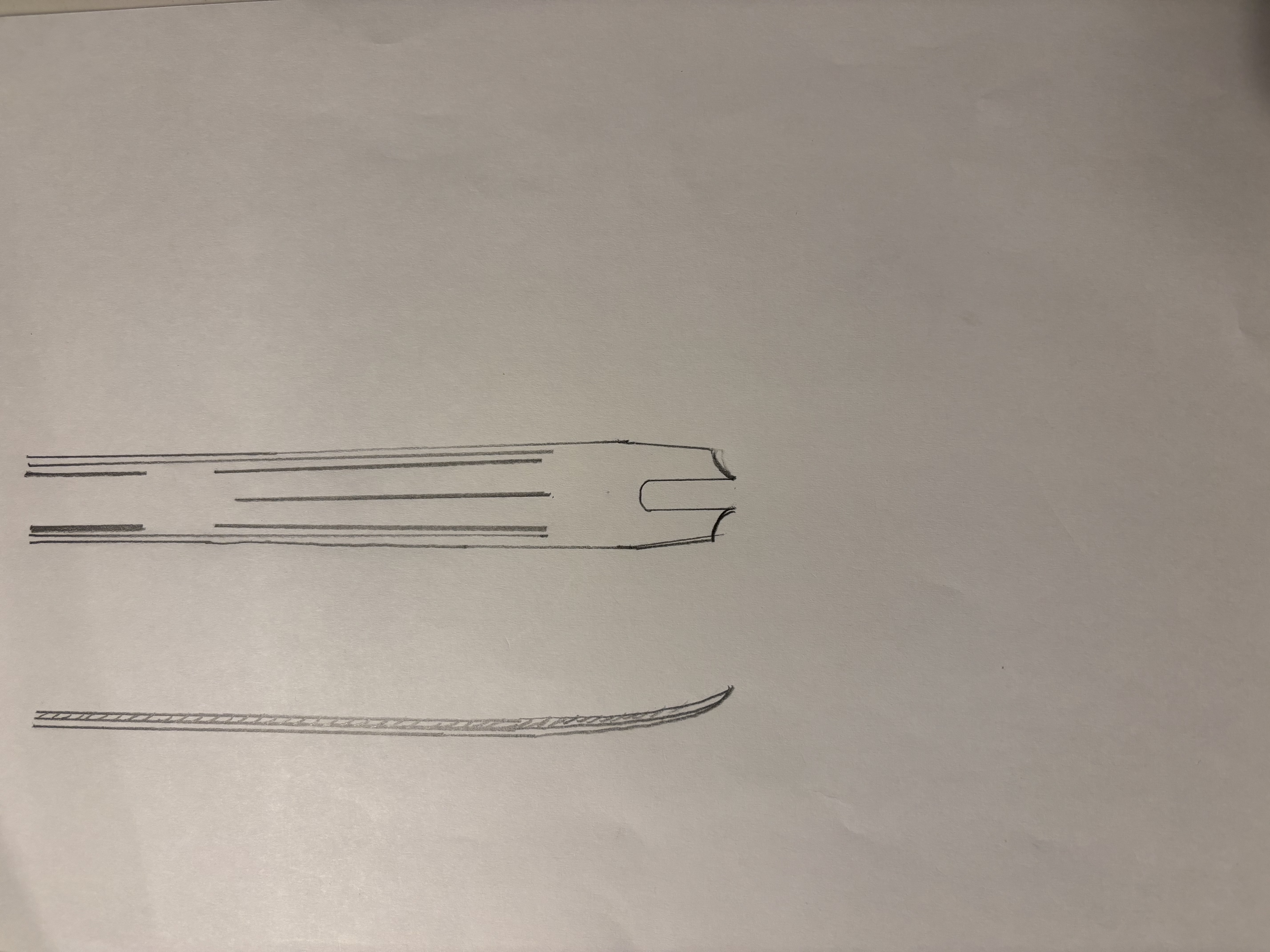
Tail detail refinement with edge profile and detailing.
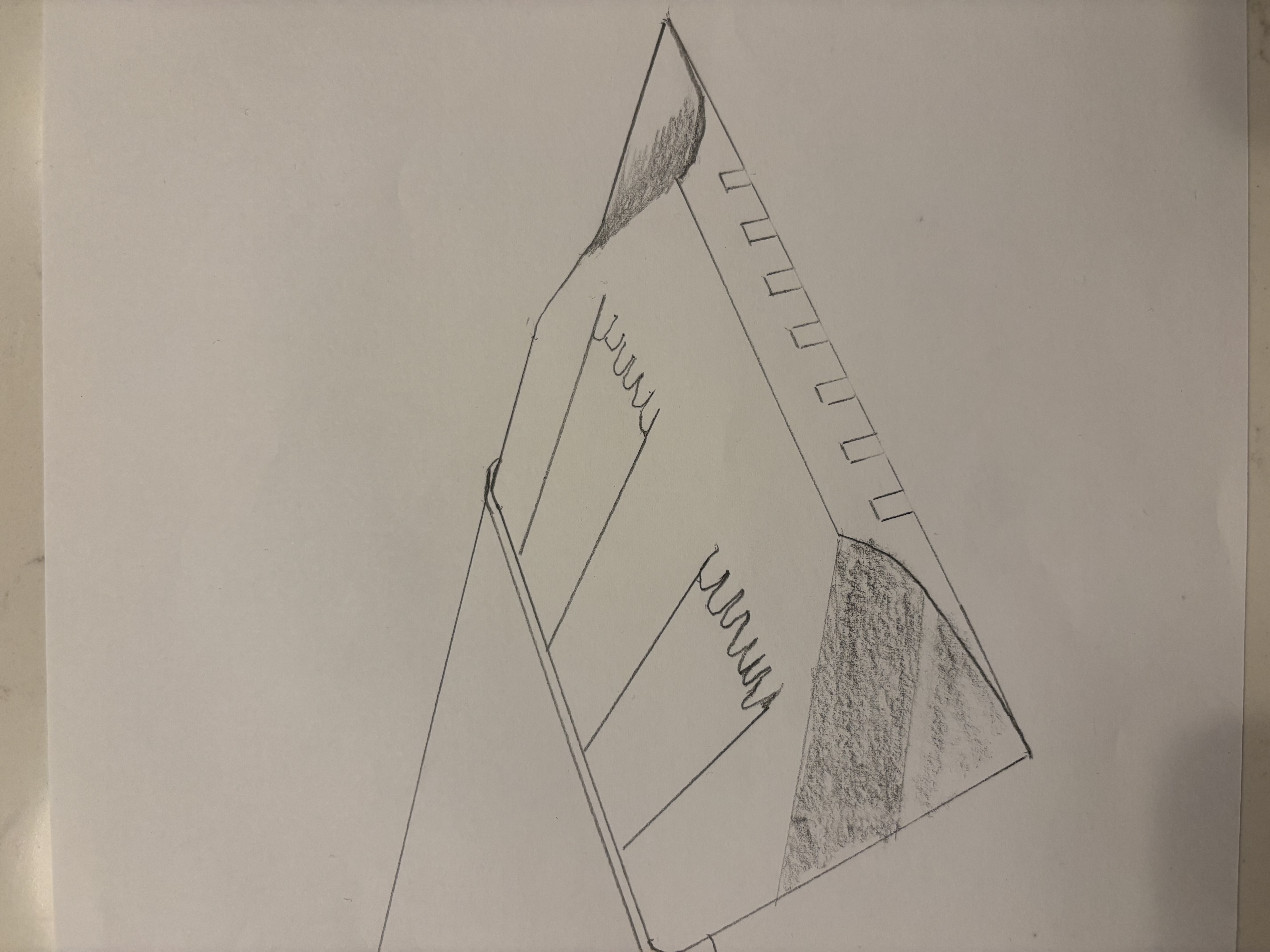
Perspective sketch exploring material layers and top sheet texture.
Cardboard prototype stage
Cardboard prototype stage
Physical tests helped validate proportions, fin placement, and handling before committing to full fabrication.
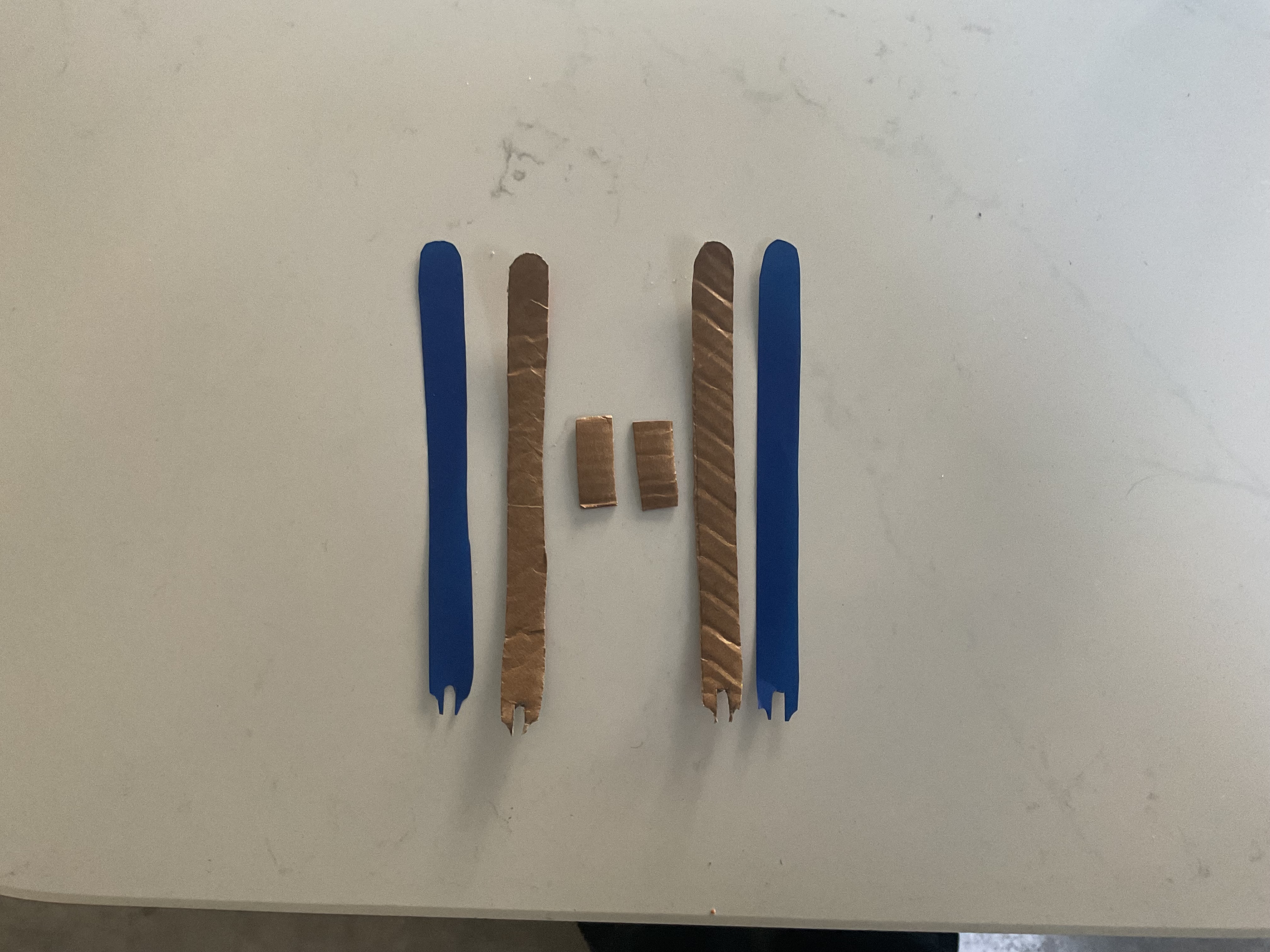
Prototype build 1 to check stance width and overall proportions.

Prototype build 2 exploring rocker and tail geometry alignment.
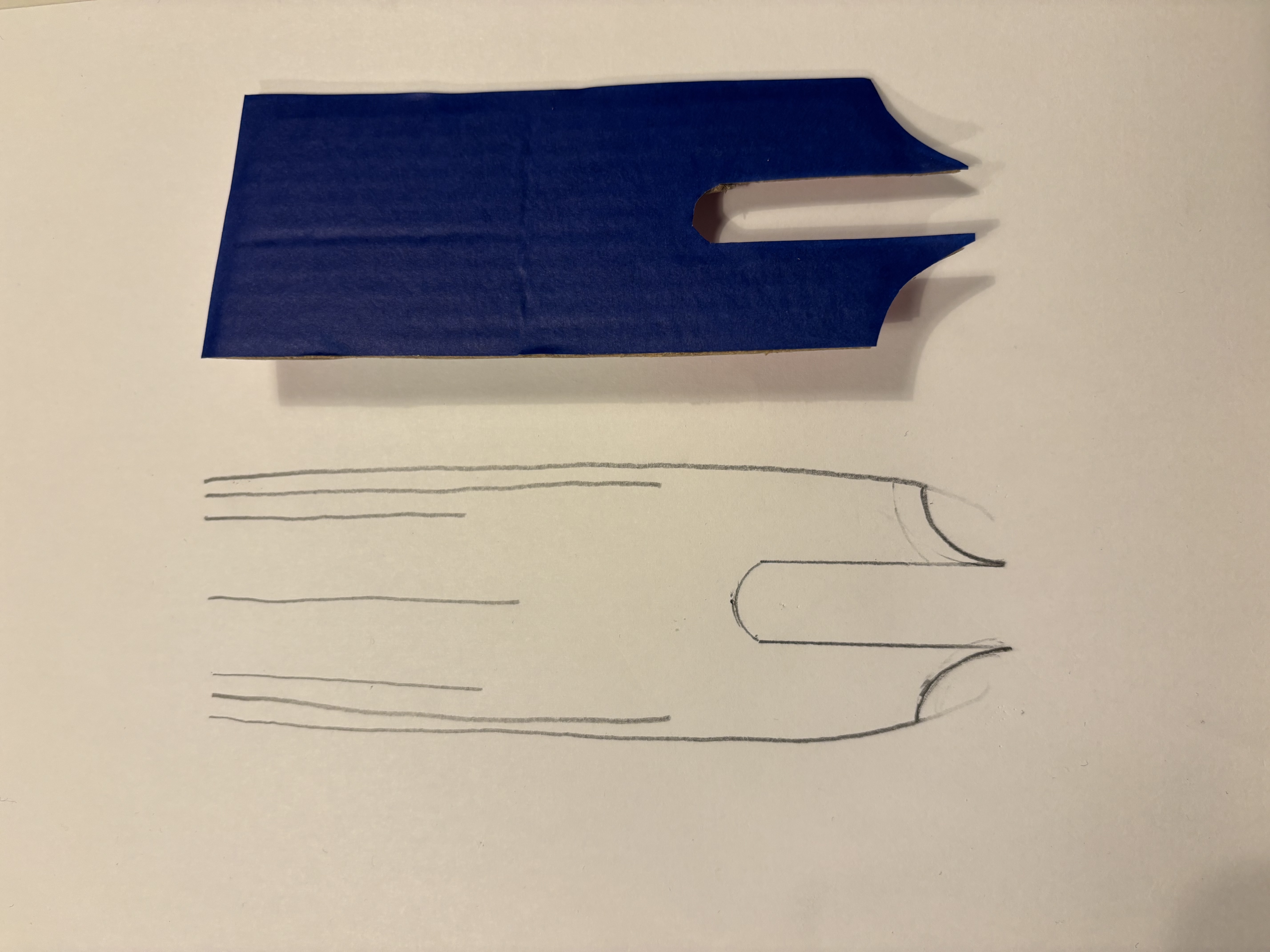
Original fin design concept used to refine directional stability.
Final build pipeline
From benchmarks to Blender
This project progressed from benchmarking and sketching, through cardboard prototyping and Fusion CAD, and concluded with Blender to visualize the final product.
Benchmarking
Studied existing skis to define sidecut, rocker, and overall proportions.
Drawings
Translated the research into sketches and dimensional targets.
Cardboard prototypes
Built physical models to validate scale and fin placement.
Fusion 360
Developed the parametric CAD model and refined the geometry.
Blender
Created the final visualization of the ski for presentation.
Blender render
Interactive view of the final product exported from Blender.
Chosen materials
Chosen materials
For this design I have chosen Ash wood with a Poplar inner core. The Poplar wood is a more flexible, lighter wood. The low weight of this soft wood in the middle of the ski helps with agility and maneuverability and helps keep the overall weight of the ski low especially good for powder snow. The hardwood Ash immediately next to the edge of the ski helps with edge grip for turns and control and supports the edges against external forces. The combination of the two wood along the whole length of the ski helps the steering precision and durability.
Refinement stage
Refinement stage
Fin refinement
The sharp fin concept is an aesthetic feature which works well with all terrain forward skiing, however, it can pose a problem for backward skiing. Therefore, introducing a clear, smooth composite cover to the fin will eliminate this problem, but the design remains intact.
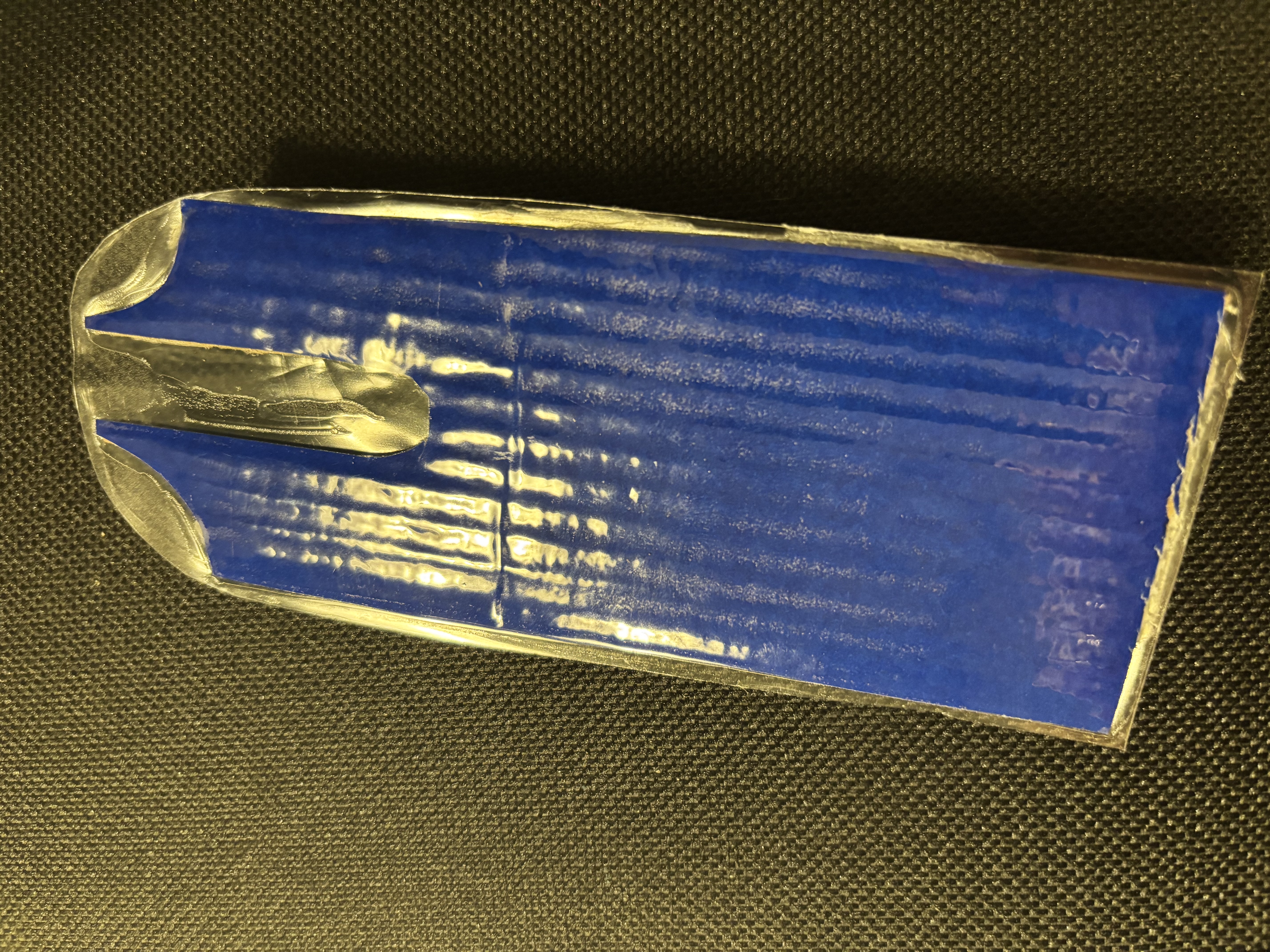
Suggested fin design with the protective composite overlay concept.
Contact
Let’s talk about product design
I’d love to share more about the ski project or other design work. Reach out for my full portfolio.
Email: zacjackson2008@gmail.com
Location: United Kingdom